
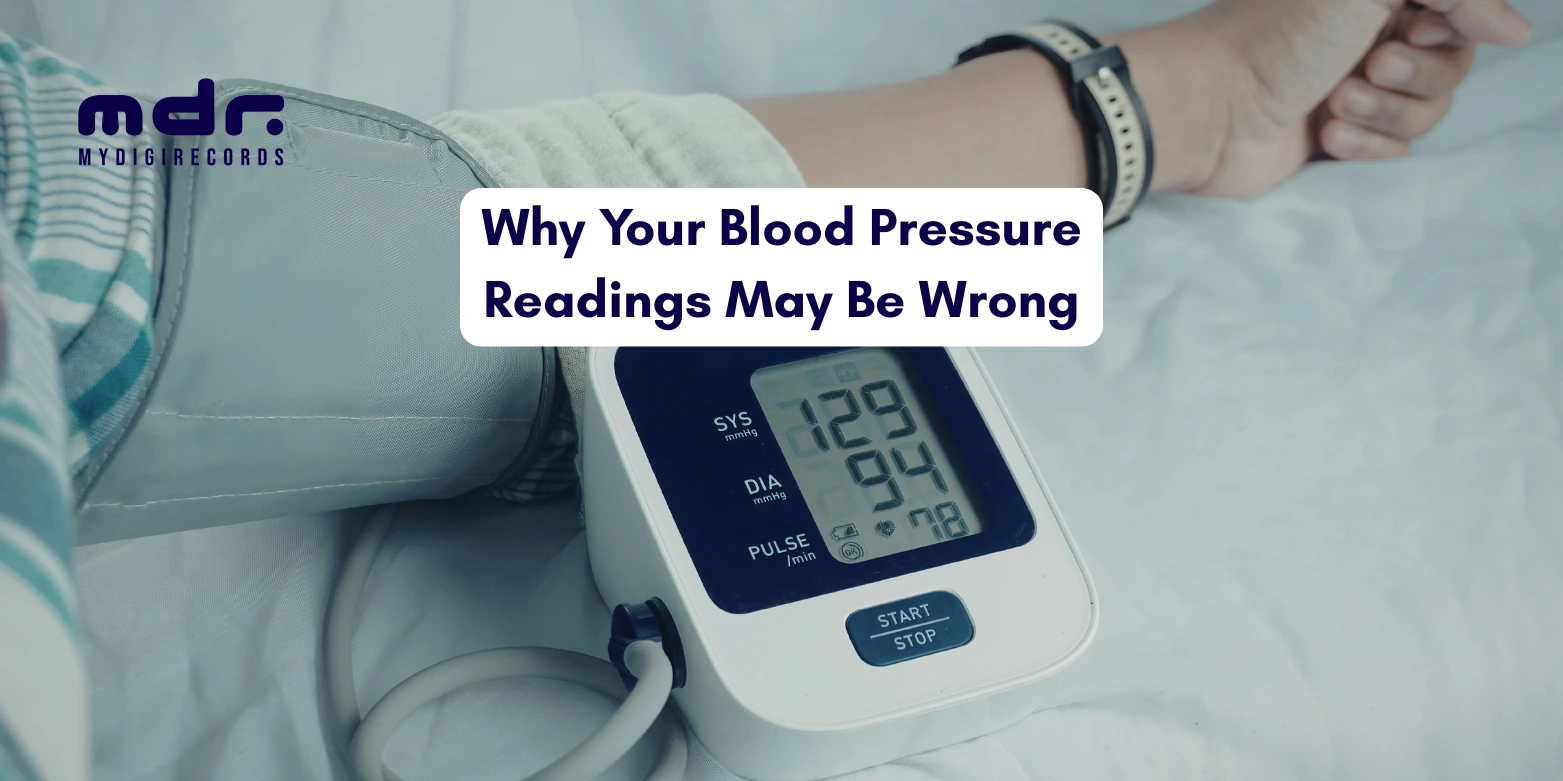
Why Your Blood Pressure Readings May Be Wrong: 7 Common Mistakes You Must Avoid
Table of Contents:
Why Accurate Blood Pressure Measurement Matters
7 Common Errors in Blood Pressure Measurements
Measuring Immediately After Activity (or tea/coffee/smoking)
Full Bladder During Measurement
Why Blood Pressure Readings Fluctuate So Much
The Problem With Manual Tracking
How Smart Monitoring Improves Accuracy
Best Practices for Accurate Blood Pressure Monitoring at Home
Why Consistent Tracking Is More Important Than Perfect Numbers
Blood pressure is one of the most important indicators of your overall health. Yet, millions of people get incorrect blood pressure readings every day without even realizing it.
You might think you have hypertension.
Or worse – you might think you’re perfectly fine.
But what if the number is wrong?
World Health Organization estimates that about 1.4 billion adults (ages 30–79) worldwide had hypertension in 2024. In India, WHO notes at least 1 in 4 adults has hypertension – and control rates are still low.
In this blog, we’ll uncover:
- The 7 most common blood pressure measurement mistakes
- Why your BP readings fluctuate
- How to measure blood pressure correctly
- And how digital health tools like SmartVitals by MyDigiRecords can help you monitor accurately and consistently
Let’s dive in.

Quick 15-second check
When you measure BP, do you ever…
- take it right after climbing stairs / rushing?
- cross your legs?
- talk during the reading?
- take just one reading and move on?
- use the same cuff for everyone at home?
If you ticked 2+, your reading can be meaningfully off – and enough to push you into the wrong “category.” (American Medical Association)

Why Accurate Blood Pressure Measurement Matters
Blood pressure readings guide life-changing decisions:
- Starting or stopping medication
- Adjusting lifestyle
- Diagnosing hypertension
- Evaluating heart risk
Even a small difference (especially near category cutoffs) can shift you from “normal” to “elevated” or “stage 1.” (American College of Cardiology)
Also: one single “random” reading isn’t your truth. Technique + trends matter more than a one-off number. (CDC)
7 Common Errors in Blood Pressure Measurements
1) Using the Wrong Cuff Size
This is the most common mistake.
If the cuff is:
- Too small → BP appears falsely high
- Too large → BP appears falsely low
Many clinics and homes use a standard cuff for everyone. But arm size varies significantly.
Correct approach (easy rule):
The inflatable bladder should be sized correctly for your arm. Standard guidance uses bladder dimensions relative to arm circumference (commonly taught as “width ~40% and length ~80%” of the arm). (PMC)
Do this: If you’re monitoring at home, make sure your device supports the right cuff size for your arm.
2) Incorrect Body Position
Your posture dramatically affects readings.
Common posture errors:
- Back unsupported
- Feet dangling / not flat
- Legs crossed
- Arm not supported at heart level
These don’t just “slightly” affect BP – they can add several mmHg, and stacked mistakes add up. For example: crossed legs can raise readings, and an unsupported arm can push systolic higher. (American Medical Association)
Correct position checklist (save this):
- Sit upright with back supported
- Feet flat on the floor
- Legs uncrossed
- Arm supported at heart level
- Rest quietly for 5 minutes before measuring (CDC)
Small posture changes = big number changes.
3) Talking During Measurement
Yes – even talking matters.
Talking (or even actively responding) can increase readings – and it’s a well-documented measurement error. (American Medical Association)
Do this: Treat BP measurement like a photo: no movement, no talking, no scrolling.
4) Measuring Immediately After Activity (or tea/coffee/smoking)
Did you just:
- Climb stairs?
- Rush to the clinic?
- Drink tea or coffee?
- Smoke?
- Exercise?
These can temporarily raise BP. Major guidance recommends avoiding exercise, smoking, and caffeine for at least 30 minutes before measurement – and resting beforehand. (www.heart.org)
Do this:
- Avoid caffeine/smoking/exercise 30 minutes prior
- Sit quietly 5 minutes before measuring (www.heart.org)
Surprisingly, a full bladder can increase systolic BP – enough to change decisions if you’re near a cutoff. (American Medical Association)
Simple fix: Visit the washroom before checking your BP.
5) Full Bladder During Measurement
Surprisingly, a full bladder can increase systolic BP – enough to change decisions if you’re near a cutoff. (American Medical Association)
Simple fix: Visit the washroom before checking your BP.
6) Not Taking Multiple Readings
One reading is never enough.
Blood pressure fluctuates throughout the day due to stress, sleep, hydration, meals, and activity.
Best practice:
- Take at least 2 readings
- Wait 1–2 minutes between them
- Record the average (CDC)
Do this: If the first reading is high, don’t panic – take the second properly and average it.
7) White Coat Hypertension
Have you noticed your BP is high at the clinic but normal at home?
This is called White Coat Hypertension – elevated office readings with normal out-of-office readings. Estimates vary by definition and population, but meta-analyses often land around the low-teens (%) overall, and it can be more common among people who show high readings in a medical setting. (PMC)
On the other hand, some people have Masked Hypertension – normal at clinic but high at home.
What this means: home monitoring + trend tracking is critical, not optional.
Why Blood Pressure Readings Fluctuate So Much
Blood pressure is dynamic – not fixed.
It changes based on:
- Time of day
- Stress levels
- Hydration
- Sleep quality
- Salt intake
- Emotional triggers
This is why one random reading does not define your health. What matters is trend monitoring over time. (CDC)
The Problem With Manual Tracking
Many people:
- Measure BP occasionally
- Forget to record it
- Lose paper logs
- Cannot show consistent history to doctors
This leads to:
- Improper medication adjustments
- Missed warning signs
- Incomplete health history
And this is exactly where digital health tools change the game.
How Smart Monitoring Improves Accuracy
Modern healthcare is shifting toward continuous monitoring instead of isolated
readings.
With SmartVitals by MyDigiRecords, you can:
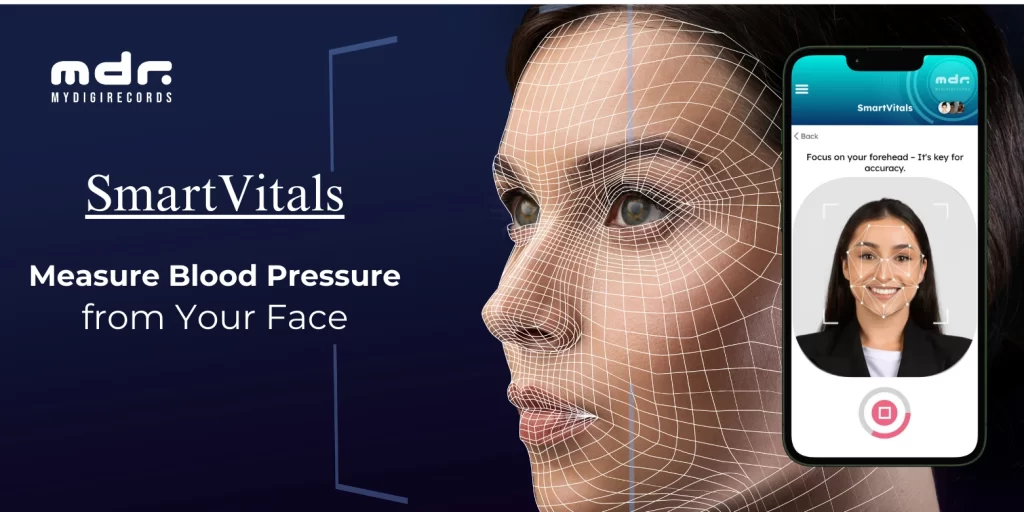
- Scan your face using AI-powered technology
- Track heart rate and blood pressure trends
- Monitor sleep quality
- Store all readings digitally
- Share history instantly with doctors
Instead of relying on occasional, error-prone readings, SmartVitals helps you monitor
consistently in a comfortable environment – reducing anxiety-related spikes and
improving trend analysis.
The biggest advantage?
You don’t just see a number.
You see patterns.
And patterns save lives.
Best Practices for Accurate Blood Pressure Monitoring at Home
Before Measuring:
- Avoid caffeine/smoking/exercise for at least 30 minutes (www.heart.org)
- Empty bladder (American Medical Association)
- Rest quietly for 5 minutes (American Medical Association)
- Sit comfortably
During Measurement:
- Back supported
- Feet flat
- Arm at heart level
- No talking (CDC)
After Measurement:
- Take a second reading
- Wait 1–2 minutes
- Record the average (CDC)
- Track trends over days and weeks
Why Consistent Tracking Is More Important Than Perfect Numbers
Here’s the truth:
Even if one reading is slightly off, what truly matters is the overall trend.
Are your readings:
- Increasing month after month?
- Stable?
- Improving with lifestyle changes?
When your blood pressure history is stored securely in MyDigiRecords, you build a lifelong health timeline. And that timeline empowers:
- Early hypertension detection
- Better cardiology consultation
- Medication effectiveness monitoring
- Preventive care
The Future of Blood Pressure Monitoring Is Digital
Traditional BP monitoring is reactive.
Digital monitoring is preventive.
Instead of waiting for:
- Headaches
- Dizziness
- Heart complications
You track proactively.
And in a country like India – where hypertension is often called a “silent killer” – regular monitoring can significantly reduce cardiovascular risk.
Blood pressure measurement seems simple. But as we’ve seen, small mistakes can cause big errors.
Let’s recap the 7 common mistakes:
- Wrong cuff size
- Poor posture
- Talking during measurement
- Measuring after activity/caffeine/smoking
- Full bladder
- Single reading reliance
- White coat effect
Correct technique + consistent monitoring = accurate health decisions.
If you’re serious about heart health in 2026 and beyond, it’s time to:
- Measure correctly
- Track consistently
- Store digitally
- Monitor trends
Because managing blood pressure isn’t about one number.
It’s about owning your health story.
More blogs for you to read

Dehydration & Fatigue: Is Your Low Energy Actually a Water Problem?
Dehydration & Fatigue: Is Your Low Energy Actually a Water Problem? Table of Contents: What Dehydration Means? Can Mild Dehydration
Can AI Really Measure Blood Pressure from Your Face? The Science Behind SmartVitals Explained
Can AI Really Measure Blood Pressure from Your Face? The Science Behind SmartVitals Explained Table of Contents: Can AI Really

Lost Medical Reports Again? Here’s a Simple Way to Never Lose Them
Lost Medical Reports Again? Here’s a Simple Way to Never Lose Them Table of Contents: A Problem Almost Everyone Faces

How AI Predicts Health Risks Before Symptoms Appear
How AI Predicts Health Risks Before Symptoms Appear Table of Contents: What If Your Health Problems Were Detected Before You