Is Your Medical Data Safe? How Modern Health Apps Protect Your Records in 2026
Table of Contents:
Is your medical data really safe?
Why Medical Data Security Matters More Than Ever
The Rise of Personal Health Record Apps
How Modern Health Apps Protect Your Medical Records
How MyDigiRecords Protects Your Health Data
The Future of Medical Data Security
Healthcare is rapidly going digital. From booking doctor appointments online to monitoring blood pressure through mobile apps, technology is transforming the way we manage our health. One of the biggest shifts of recent years is the rise of digital health records and personal health record (PHR) apps – platforms that allow people to store, organize, and access their medical data anytime, anywhere.
But with this convenience comes a critical question many people are asking in 2026:
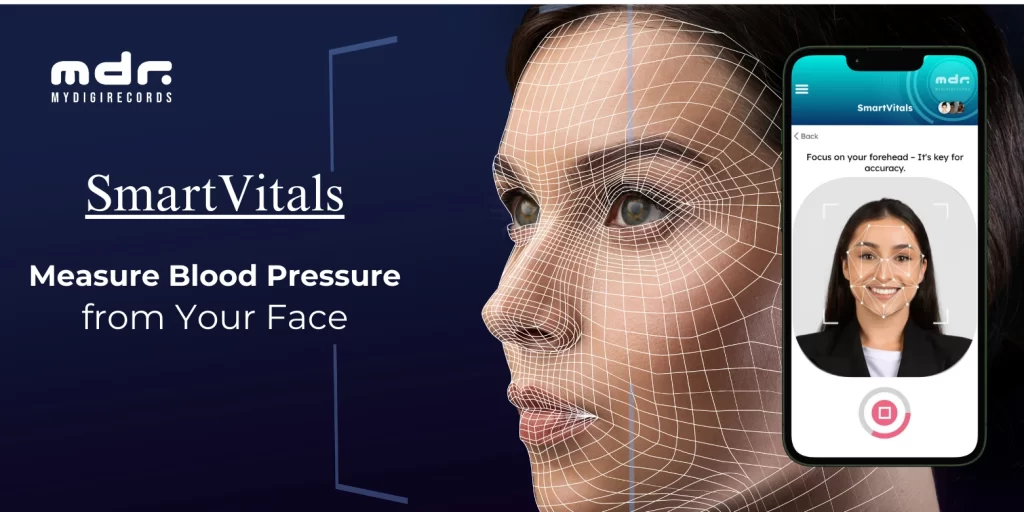
Read This Also: Can AI Really Measure Blood Pressure from Your Face?
Is your medical data really safe?
Your health information is among the most sensitive data you own. It contains details about your medical history, prescriptions, diagnostic reports, allergies, vaccinations, and more. If this information falls into the wrong hands, it could lead to privacy violations, identity theft, or serious misuse of sensitive health data.
Fortunately, modern health apps have evolved significantly to protect users’ medical information. Advanced technologies, strict privacy frameworks, and government regulations are making digital healthcare platforms safer than ever before.
In this article, we explore how modern health apps protect your medical records in 2026 – what security measures they use, and how platforms like MyDigiRecords (MDR) ensure your health data remains private and secure.
Why Medical Data Security Matters More Than Ever
In the past, medical records were stored in physical files inside hospitals or clinics. While that system had its own risks – fire, theft, physical damage – the information was at least contained within a controlled environment.
Today, healthcare data is increasingly stored in digital systems, cloud servers, and mobile applications. This shift has made healthcare far more efficient, but it has also introduced new and serious security challenges.
⚠️ Did You Know? In 2024 alone, a record 276 million patient records were compromised in healthcare data breaches – the worst year on record for healthcare cybersecurity.
Healthcare data is extraordinarily valuable. According to cybersecurity researchers, stolen medical records can fetch up to 50 times more than a stolen credit card on the dark web, because they contain:
→ Personal identity information
→ Insurance details and policy numbers
→ Full medical history
→ Prescription records
→ Diagnostic reports
→ Contact and financial information
If such data is exposed, the consequences can be severe – from insurance fraud and identity theft to the misuse of sensitive personal health information.
That is why modern digital health platforms are built with robust security frameworks designed specifically to protect healthcare data at every level.
Read This Also: Is Your Low Energy Actually a Water Problem?
The Rise of Personal Health Record Apps
Personal Health Record (PHR) apps are becoming a cornerstone of modern healthcare. These apps allow individuals to store and manage their own medical information digitally – on their own terms.
Instead of relying on multiple hospitals, laboratories, and clinics to maintain fragmented records, users can now keep everything in one secure digital health record system. PHR apps offer several powerful advantages:
→ Easy, anytime access to medical records
→ Better coordination between doctors and specialists
→ Quick sharing of critical reports during emergencies
→ Organized long-term health history for continuous care
But for users to truly trust these systems, security cannot be an afterthought – it must be baked into the foundation.
How Modern Health Apps Protect Your Medical Records
Health technology companies are deploying advanced, multi-layered security techniques to ensure that users’ medical data stays protected. Here are the most important security layers used by modern health apps in 2026.
1. End-to-End Encryption
End-to-end encryption is one of the most critical security technologies in healthcare apps today. Encryption converts your data into a secure format that cannot be read without the proper decryption key.
When you upload a medical report or prescription to a secure health app:
- The data is encrypted before it leaves your device
- It remains encrypted during transmission
- It is stored in encrypted form on secure servers
Even if someone intercepts the data, they cannot read it. Encryption is now a non-negotiable standard for any reliable digital health record platform.
2. HIPAA-Compliant Cloud Storage
Most modern health apps store medical data in secure cloud environments rather than on local devices alone. Cloud storage provides several important advantages:
→ Enterprise-grade server security
→ Automated data backups
→ Protection from device loss or damage
→ Continuous monitoring for security threats
Reputable healthcare apps use cloud infrastructure that complies with HIPAA regulations and equivalent international data protection standards, ensuring the highest levels of protection and availability.
3. Multi-Factor Authentication (MFA)
Passwords alone are no longer sufficient to protect sensitive health data. NIST and major health regulators now recommend Multi-Factor Authentication (MFA) as a baseline security requirement.
MFA requires users to verify their identity through multiple steps, such as:
→ Password or PIN
→ One-time verification code sent to a trusted device
→ Biometric authentication – fingerprint or face scan
Even if someone obtains your password, they cannot access your account without the second verification factor. This dramatically reduces the risk of unauthorized access.
4. Role-Based Access Control
Modern health platforms implement role-based access control, giving users granular control over who can view specific health records. You may choose to share:
→ Blood test reports with your physician
→ Vaccination records with your child’s school
→ Insurance documents with your healthcare provider
You maintain full control at all times – sensitive information is shared only when you authorize it, with exactly the people you choose.
5. Government-Backed Digital Health Frameworks
Governments around the world are introducing secure digital health systems to standardize healthcare data management. In India, the Ayushman Bharat Digital Mission (ABDM) is leading this transformation – with over 84.79 crore ABHA health IDs created and 82.69 crore health records linked as of early 2026.
This initiative focuses on:
→ Unique, verifiable health IDs for every citizen
→ Secure digital health records across providers
→ Standardized healthcare data exchange protocols
→ Privacy-first architecture and user consent frameworks
Internationally, frameworks like HIPAA (United States) and GDPR (European Union) set similar standards for data privacy and security. Health apps that align with these frameworks follow strict guidelines to ensure data protection, transparency, and user control.
6. Regular Security Audits and Updates
Cyber threats evolve constantly. That is why health technology companies regularly perform security audits and issue software updates. These processes identify potential vulnerabilities before they can be exploited.
Modern health apps conduct:
→ Penetration testing and security assessments
→ Data protection impact analyses
→ Software patch and update cycles
→ Real-time continuous monitoring systems
7. Data Ownership and User Control
One of the most important shifts in digital healthcare is the principle of data ownership. In the past, hospitals and clinics controlled patient records. Today, modern health platforms put individuals in charge of their own data.
Users can:
→ Upload and organize their health reports
→ Share records with doctors when needed
→ Download or delete their data at any time
→ Set and revoke access permissions
Your medical history is yours – and the best platforms are built around that principle.

How MyDigiRecords Protects Your Health Data
Platforms like MyDigiRecords (MDR) are built from the ground up with security, privacy, and accessibility at the core. MDR allows individuals and families to store health records digitally while ensuring sensitive information stays protected at every step.
Secure Digital Health Record Management
MDR enables users to safely upload and store lab reports, prescriptions, vaccination records, insurance documents, and full medical histories — all organized in one secure place for easy access.
Smart Access and Sharing
In emergencies or during doctor consultations, users can instantly share the right medical reports without digging through physical files. Sharing is controlled, fast, and secure — you decide what gets shared and with whom.
Family Health Management
Managing records for multiple family members is one of healthcare’s biggest practical challenges. MDR allows users to manage family health profiles, making it straightforward to track medical histories for parents, children, or dependents – all in one place.
Smart Health Insights
Features like SmartVitals help users monitor key health indicators through connected technology, enabling a more proactive approach to health. By combining health monitoring with secure record management, MDR helps users stay informed about their well-being.
The Future of Medical Data Security
Healthcare technology is advancing rapidly, and the next generation of health apps will bring even stronger security capabilities. Emerging innovations include:
→ AI-powered fraud detection and anomaly monitoring
→ Blockchain-based medical record systems being actively piloted
→ Biometric-only authentication removing password vulnerabilities entirely
→ Decentralized health data networks giving users full custody of their records
These technologies will further strengthen healthcare data protection and give users unprecedented control over their information.
Tips to Keep Your Medical Data Safe
Modern health apps provide strong security infrastructure – but users play an important role too. Follow these simple practices:
→ Use strong, unique passwords for every health platform
→ Always enable multi-factor authentication
→ Never share login credentials with others
→ Keep your apps updated to the latest version
→ Only use trusted, regulated healthcare platforms
→ Check app privacy policies before uploading sensitive records
Final Thoughts
As healthcare continues its digital transformation, protecting medical data has become one of the most important challenges of our time.
The good news: modern health apps are designed with strong security systems, end-to-end encryption, regulatory compliance, and user control mechanisms that make digital health record management both convenient and genuinely safe.
Platforms like MyDigiRecords demonstrate how technology can empower individuals to manage their health information securely – while improving access to better, more coordinated healthcare.
In 2026 and beyond, the future of healthcare will rely on secure, user-controlled digital health records. The key is choosing trusted platforms that prioritize privacy, security, and transparency – so you can focus on what truly matters:
More blogs for you to read

Dehydration & Fatigue: Is Your Low Energy Actually a Water Problem?
Dehydration & Fatigue: Is Your Low Energy Actually a Water Problem? Table of Contents: What Dehydration Means? Can Mild Dehydration

Can AI Really Measure Blood Pressure from Your Face? The Science Behind SmartVitals Explained
Can AI Really Measure Blood Pressure from Your Face? The Science Behind SmartVitals Explained Table of Contents: Can AI Really

Why Your Blood Pressure Readings May Be Wrong: 7 Common Mistakes You Must Avoid
Why Your Blood Pressure Readings May Be Wrong: 7 Common Mistakes You Must Avoid Table of Contents: Introduction Quick 15-second

Lost Medical Reports Again? Here’s a Simple Way to Never Lose Them
Lost Medical Reports Again? Here’s a Simple Way to Never Lose Them Table of Contents: A Problem Almost Everyone Faces